ITS Monday: Edition 15, 2026

ITS Monday is a small, weekly collection of curated content from the worlds of intelligent transport systems, smart mobility, and associated areas. This is the 265th edition to date, and the first for 2026.
Included this week, EV growth, Sydney public transport, fixig cities, electric ships. and more.
The article headlines below are:
- Electric transport is no longer niche. This year’s budget shows it’s the future
- Can a sprawling city make public transit work? Sydney may be on the right track
- Our cities are choked by cars – here’s how experts would fix them
- Access door-to-door: An intercity efficiency and distributional analysis of the costs of travel by plane, train, and automobile
- “Like putting a cup into a holder:” Electric ships could soon be charging at sea
- Temporal instability of commuting determinants evidence from electric vehicle telematics data in South Korea
This week’s articles
Now, scroll down, and see what’s in this week’s edition. Oh, and before you do, be sure check out the quickest way to receive our new content via the subscription box just below …


Electric transport is no longer niche. This year’s budget shows it’s the future
Professor Hussein Dia, writing in The Conversation. “The 2026 budget has important investments in freight rail, walking and cycling and fuel supplies.
But there were big gaps too. There was little to boost the EV charger network or begin electrifying heavy vehicles. There was also no clear plan for how governments will replace fuel excise revenue as transport electrifies.
Overall, the budget continues the cautious and incremental shift towards electric transport, rather than hitting the accelerator.”
Related iMOVE article:
- FACTS: A Framework for an Australian Clean Transport Strategy
- The Conductor Series: The electrification of transport
- Sustainable Transportation: Info, projjects, and resources/
Related iMOVE projects:
READ THE ARTICLE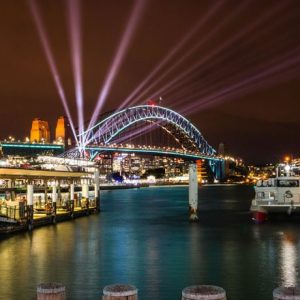
Can a sprawling city make public transit work? Sydney may be on the right track
“With transport projected to be Australia’s highest-emitting sector by 2030, the city has recognised the need to invest in public transport to reduce emissions and costs. In April, the New South Wales government announced it would save $130m through a seven-year deal for all the electricity in its network to come from renewable sources, although the vast majority (84%) of its 9,700 public transit vehicle fleet is made up of diesel buses.”
Related iMOVE projects:
- Electric school buses for regional WA: Challenges and solutions
- Planning for the electrification of the Victorian bus fleet

Our cities are choked by cars – here’s how experts would fix them
“Yet while some cities with world-class public transport are debating how to tackle the stubborn minority of journeys still made by car, others – particularly in the US – have become so dependent on driving that opting out is almost impossible.
From connecting commuter suburbs to persuading royals to use buses, here are four expert-backed ways for tackling car culture.”
READ THE ARTICLE
An introduction to, and a link to, a new academic paper, co-authored by Lijie Yu, Miao Li, Zhe Dai, Mengying Cui, and David Levinson.
The abstract:
Existing studies typically evaluate air travel accessibility by examining either air network performance or ground access to airports in isolation. This paper offers a complementary perspective by assessing the national air travel accessibility through a door-to-door framework and comparing it against multiple modes of intercity transport. We compare four scenarios: air-only, railway-only, highway-only, and an optimal-mode scenario.
The first three rely exclusively on a single mode for intercity trips, whereas the optimal-mode scenario selects the lowest-cost option among air, rail, and direct driving for each origin–destination pair. The results show that air travel provides higher accessibility and more balanced spatial equity than rail or highway travel at higher cost thresholds. Air travel also delivers clear advantages in regions with significant geographical constraints, where land-based transport infrastructure is limited.
Although the optimal-mode scenario generally enhances spatial equity, it reduces within-group equity in regions characterized either by highly developed urban cores (e.g., the Yangtze River Delta in East China) or by significant geographic constraints (e.g., the peninsula areas of Northeast China).
READ THE ARTICLE
“Like putting a cup into a holder:” Electric ships could soon be charging at sea
A consortium of Norwegian companies and research organisations have developed what they describe as a “plug and play” system for charging battery powered service vessels at sea.
READ THE ARTICLE
A new academc paper, co-authored by Chansung Kim, Sung Moon Kwon, and KyeoungJu Kim
The abstract:
This study highlights the potential risks of assuming coefficient invariance in annual cross-sectional data, particularly in the context of high-frequency behavioral shifts. Using a one-year longitudinal dataset of electric vehicle travel logs, this study employs a state-space model to estimate time-varying parameters.
The results reveal a clear dichotomy: structural factors (departure time, location) remain stable, while exogenous factors (weather, battery status) exhibit high behavioral volatility. The significant state variance in the intercept and exogenous variables suggests that static analyses run the risk of misinterpreting transient noise as structural relationships for specific exogenous factors.
These findings indicate that commuting determinants are not constant but time-varying, suggesting that dynamic longitudinal approaches can complement static analyses by revealing temporal variations that single-point estimates may overlook.
READ THE ARTICLEDiscover more from iMOVE Australia Cooperative Research Centre | Transport R&D
Subscribe to get the latest posts sent to your email.