ITS Monday: Edition 29, 2026

ITS Monday is a small, weekly collection of curated content from the worlds of intelligent transport systems, smart mobility, and associated areas. This is the 265th edition to date, and the first for 2026.
Included this week, transitioning to electric trucks, diesel buses for Queensland, and ferry electrification.
The article headlines below are:
- Electric truck transition guides
- “Fanciful pipe-dream:” Queensland dumps mandate for electric buses, calls them “big, expensive paperweights”
- Operational challenges of ferry electrification: Scheduling under berth and charging limitations
This week’s articles
Now, scroll down, and see what’s in this week’s edition. Oh, and before you do, be sure check out the quickest way to receive our new content via the subscription box just below …


Electric truck transition guides
This set of resoue=rces has been put together by the NSW Givernment Climate and Energy Action department.
“Thinking about transitioning your trucks to electric? Whether you operate a small delivery fleet, council vehicles, service trucks or heavy freight vehicles, our electric truck guides will help you understand some of the opportunities, challenges and practical steps involved in making the switch.
Electric trucks help businesses cut fuel costs, lower emissions, and meet sustainability goals. But a successful transition takes planning: from vehicle selection and charging infrastructure to depot operations, energy supply, and total cost of ownership.
Our electric truck guides bring all these considerations together in one place, to help you make informed decisions for your business.”
Related iMOVE articles:
- Electric Vehicles: Info, Projects & Resources
- The Conductor Series: The electrification of transport
Related iMOVE projects:
- Leading the charge in bi-directional charging
- Utrecht to Australia: Unlocking scalable, low-cost V2G
- Being a V2G trailblazer: Lessons for mass market adoption

Menwhile, in Queensland there is some less than positive news regarding an electric vehicle switch. “Queensland’s state LNP government has revealed plans to buy up to 630 new buses to replace the state’s ageing fleet of vehicles, promising “modern” and “fully accessible buses” but virtually guaranteeing that none of the buses will be electric.”
Related iMOVE projects:
- Electric school buses for metro & regional WA: Enabling the shift
- A community e-bus pilot program for regional Australia
- Planning for the electrification of the Victorian bus fleet
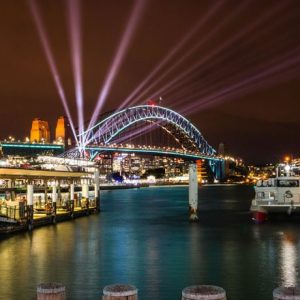
Operational challenges of ferry electrification: Scheduling under berth and charging limitations
A new academic paper, co-authored by Lin Lin, Orlando Rivera Letelier, Xinyu Wang, and Andres Fielbaum.
The abstract:
In response to growing global commitments to zero-emission public transport, this paper addresses the operational complexities of electrifying ferry systems. Electric ferries introduce unique scheduling challenges due to their high energy consumption, limited battery range, and constrained berth availability. This paper develops a mathematical model to test whether these operational challenges can make electric ferry operation infeasible.
Given a ferry network and fixed line headways, this paper proposes a Mixed Integer Linear Program (MILP). The model generates vessel schedules that include line timing, berth assignment, battery charging, crew breaks, and vessel repositioning. To improve tractability over real-world networks, a terminal-timing heuristic is implemented. The objective function is a convex combination of fleet size and rebalancing time. The method is applied to two toy models and to the Sydney ferry network, generating different feasible solutions depending on the weight given to each objective, followed by a discussion on the conditions that make electrification feasible.
Results from the Sydney case study suggest that electrification will be operationally challenging under the current berth configuration and realistic charging assumptions, with feasible incumbent schedules showing increased rebalancing and substantial charging-related terminal occupation. Furthermore, for the current Sydney configuration and Auckland-based charging speeds, no feasible solution was found within the computational limit; feasible schedules were obtained only in scenarios with additional infrastructure or faster charging. Overall, the MILP is shown to have sufficient flexibility to study the operational effects of ferry electrification under different scenarios.
READ THE ARTICLEDiscover more from iMOVE Australia Cooperative Research Centre | Transport R&D
Subscribe to get the latest posts sent to your email.